
A Driver's License for Robot Cars - Experiences from a Robotics Workshop
As part of our fifth semester, we had the opportunity to actively contribute to educational work outside of university. At CoderDojo Schöneweide e.V., we developed and led an mBot Driver’s License Workshop that gave children a hands-on introduction to robotics and programming. The goal was not only to convey technical knowledge, but above all to foster enthusiasm, self-confidence, and curiosity.
Workshop Objectives
Our goal was to introduce children to the basics of the mBot in an understandable and playful way. They were to learn how a robot is built, how sensors work, and how to control movements deliberately through programming. Beyond that, we wanted to strengthen the children’s problem-solving skills and show them that mistakes are a normal part of the learning process.
Commitment and Preparation
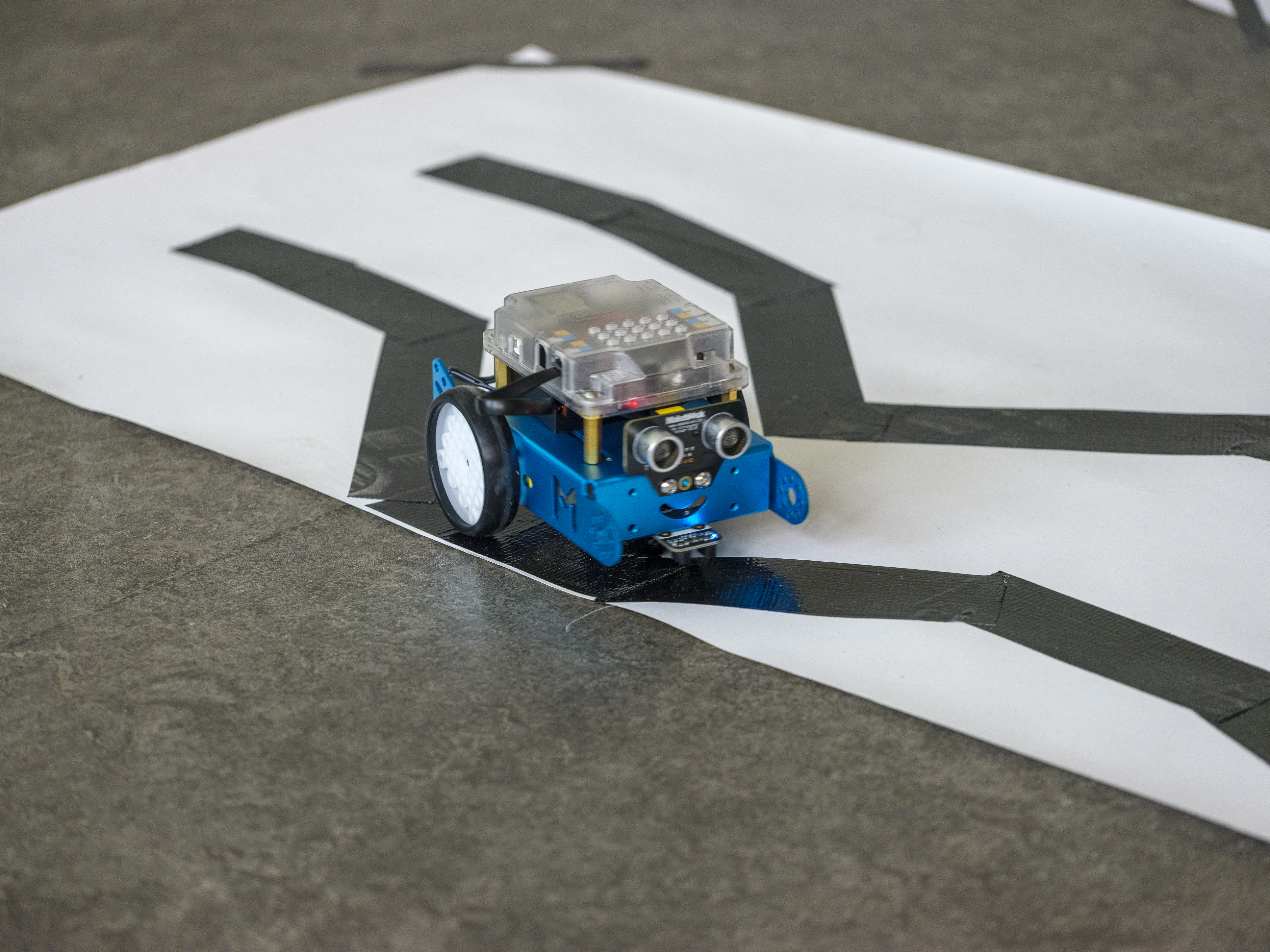
To achieve these goals, we invested a great deal of time in planning and preparation beforehand. We tested the mBots extensively, programmed example sequences, and developed various driving test levels modeled after a real driver’s license exam. These included line following, turning with indicator signals, and more complex routes. We also gathered ideas on how to make the workshop varied and motivating.
Challenges During the Project
Despite thorough planning, we faced several challenges. Printing and preparing the driving maps turned out to be more time-consuming and costly than expected. Overall preparation time was also tight, which meant some technical issues only became apparent on-site. A comprehensive tech check under time pressure was therefore necessary. These situations demanded quick action, clear communication, and task prioritization from us.
Applying Existing Skills
During the workshop, we were able to apply and build on existing competencies. Problem solving played a particularly important role, as each child chose different approaches and required individual support. Time management was also crucial in order to run the workshop in a structured way while still responding flexibly to the children’s spontaneous needs.
New Skills and Learning Experiences
Alongside the technical engagement with the mBot, we also learned new, more organizational and social skills. These included risk management — for instance when dealing with technical failures — as well as handling challenging situations in a professional manner. Particularly instructive was working with very different children and their parents, which called for patience, empathy, and clear communication.
Reflection and Room for Improvement
After the workshop, we reflected critically on our work. For future workshops, we would like to improve the organization further, test the devices more thoroughly in advance, and ideally run trial sessions. These measures could help reduce stressful situations and place even greater focus on the children’s learning experience.
Conclusion
The mBot Driver’s License Workshop was an extremely valuable experience for us. We were able to expand not only our technical and organizational knowledge, but also strengthen important social competencies. Most of all, it was inspiring to see the curiosity, creativity, and independence with which the children approached the tasks. The experiences from the workshop showed that early access to technology is well received by children and supports them in their continued learning.