
On March 15, 2025, CoderDojo held a drone-building workshop with the Air:bit 2 for children and young people at the “Alte Feuerwache” library.
After the workshop concept had been developed by Aiko and Bruno, and Yannick had translated the manufacturer’s instructions into German for the participants, the mentors first got to know the drone in advance during two crash courses.
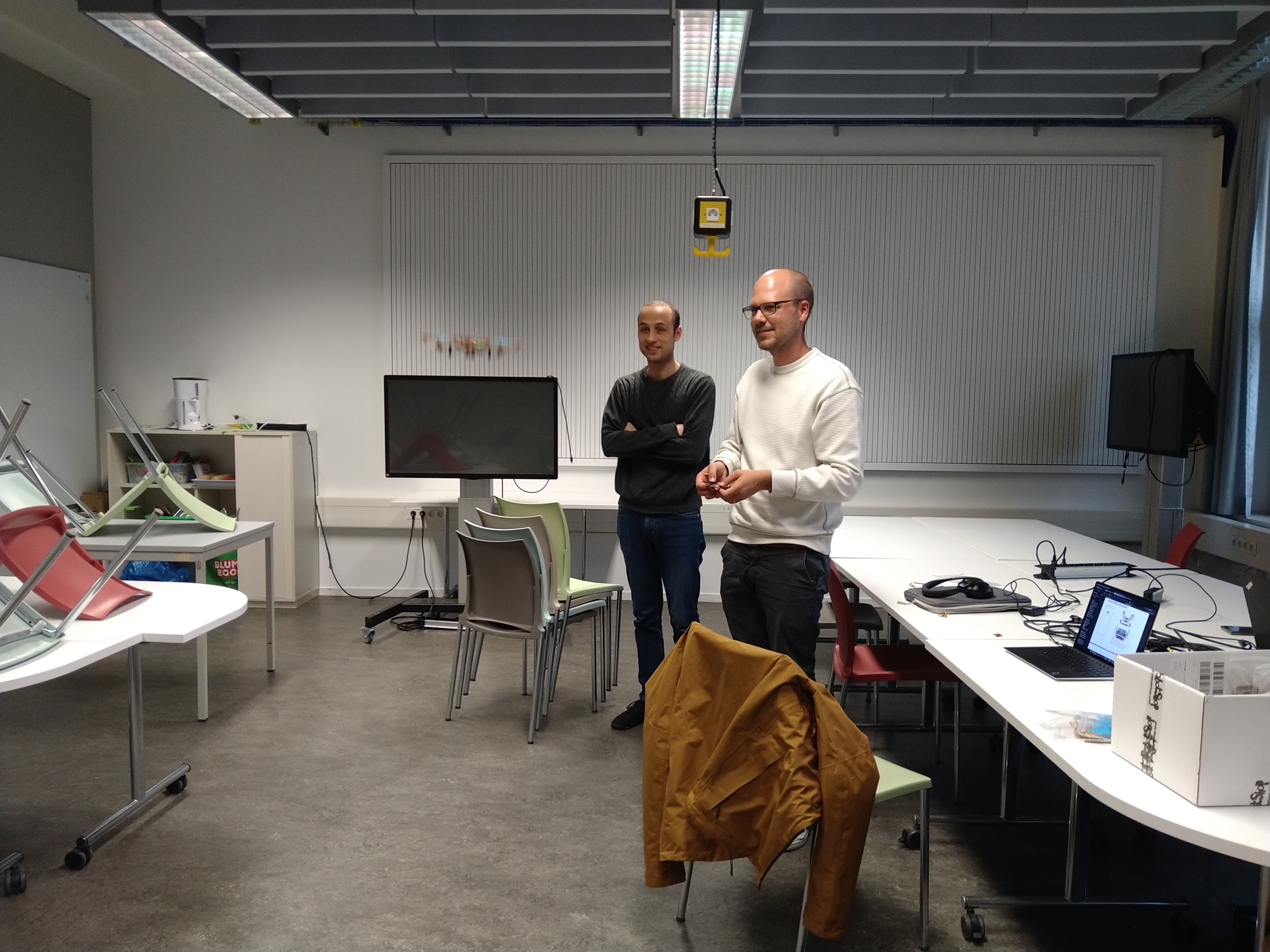
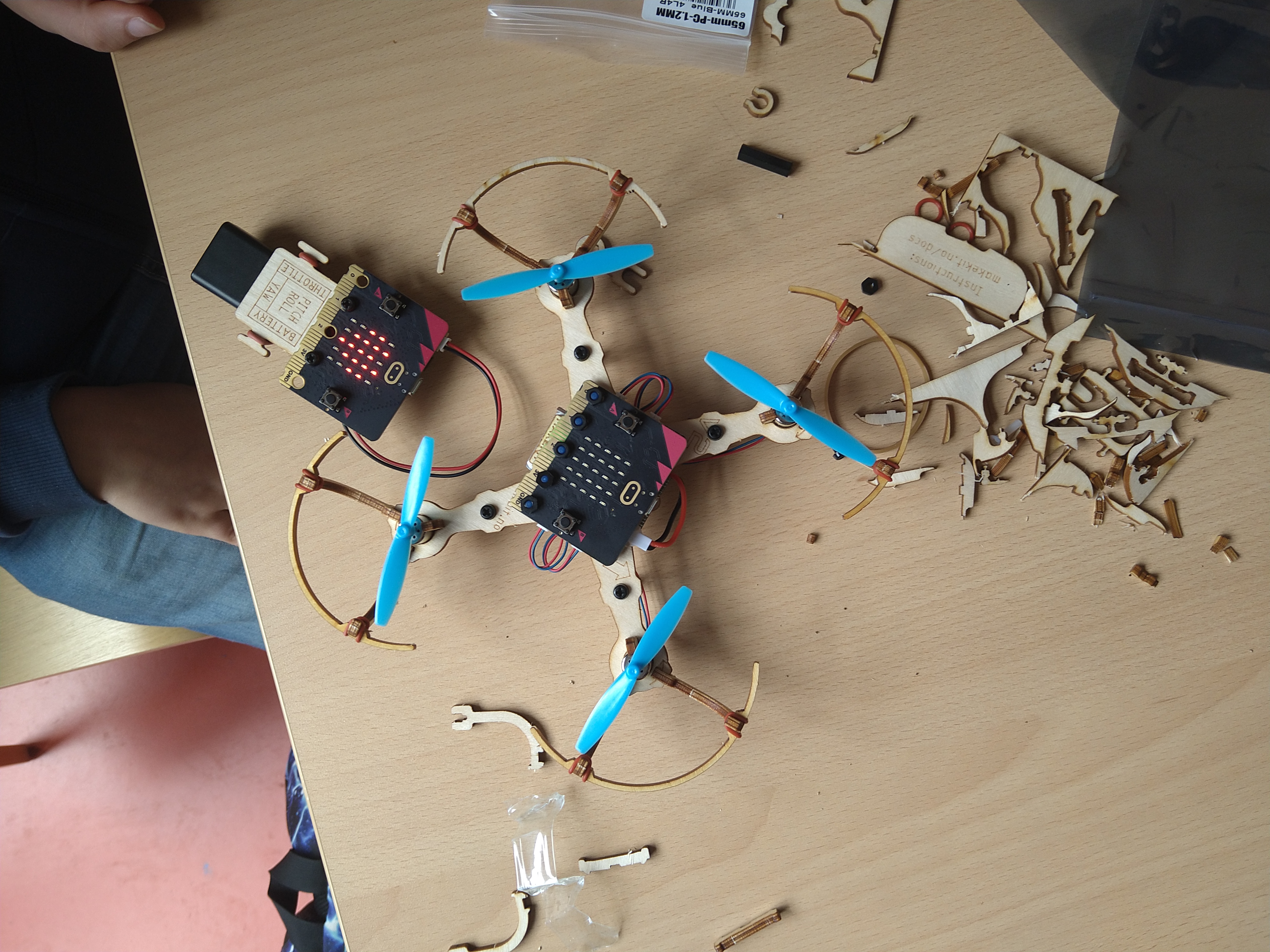
The workshop content was as follows: First, the topic was introduced and safety instructions were explained in a child-friendly way. Then the components of the drone and its controls were discussed. The children then formed groups. Each of the seven groups was supervised by a mentor, who supported each other with questions. The children first explored the components in their drone building kit, which they then assembled using the instructions.
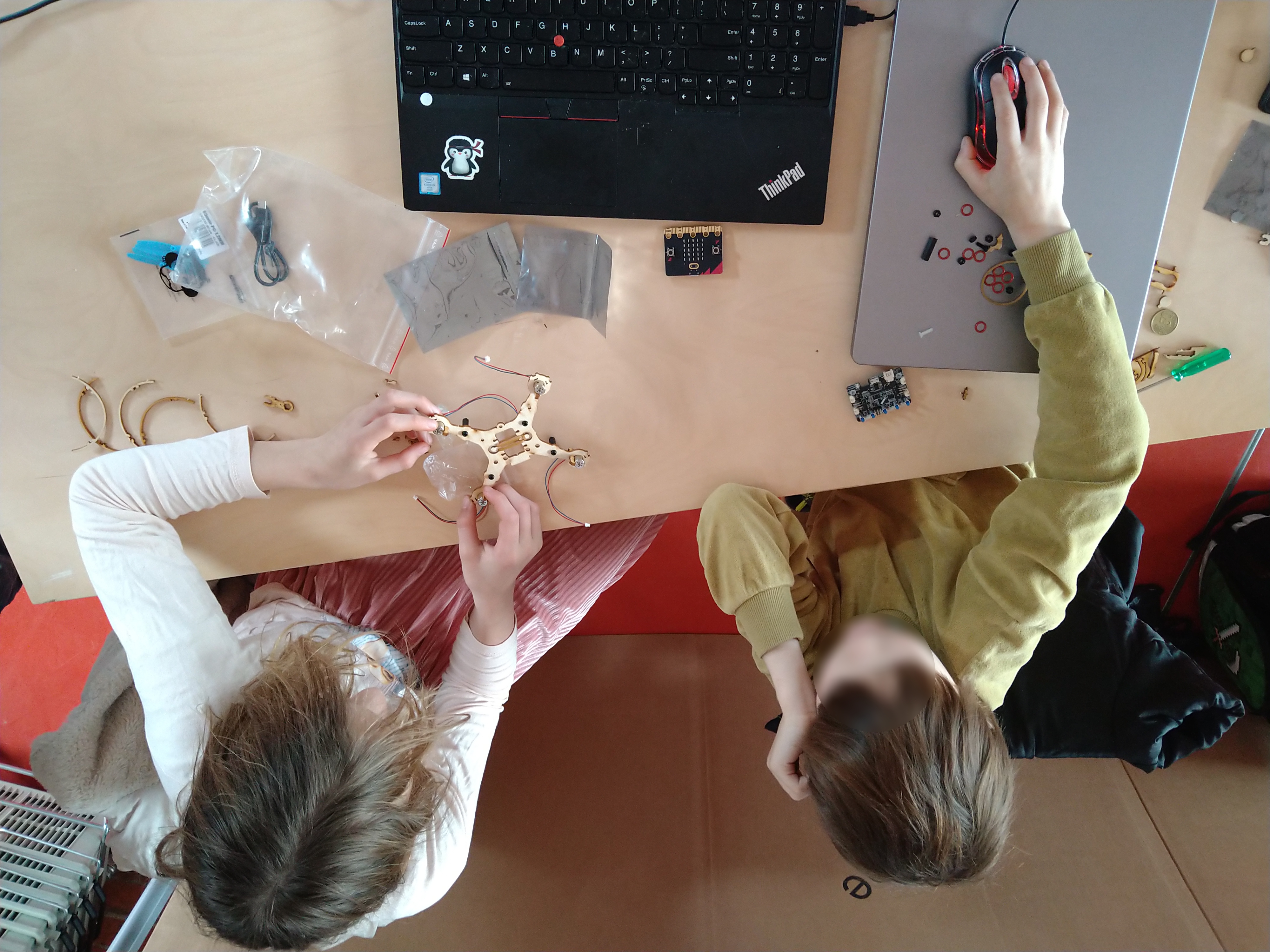
Some steps proved to be challenges for fine motor skills, especially for the younger children: Removing the wooden parts, inserting the motors, and assembling and attaching the propeller guard required a balance between strength and delicacy.
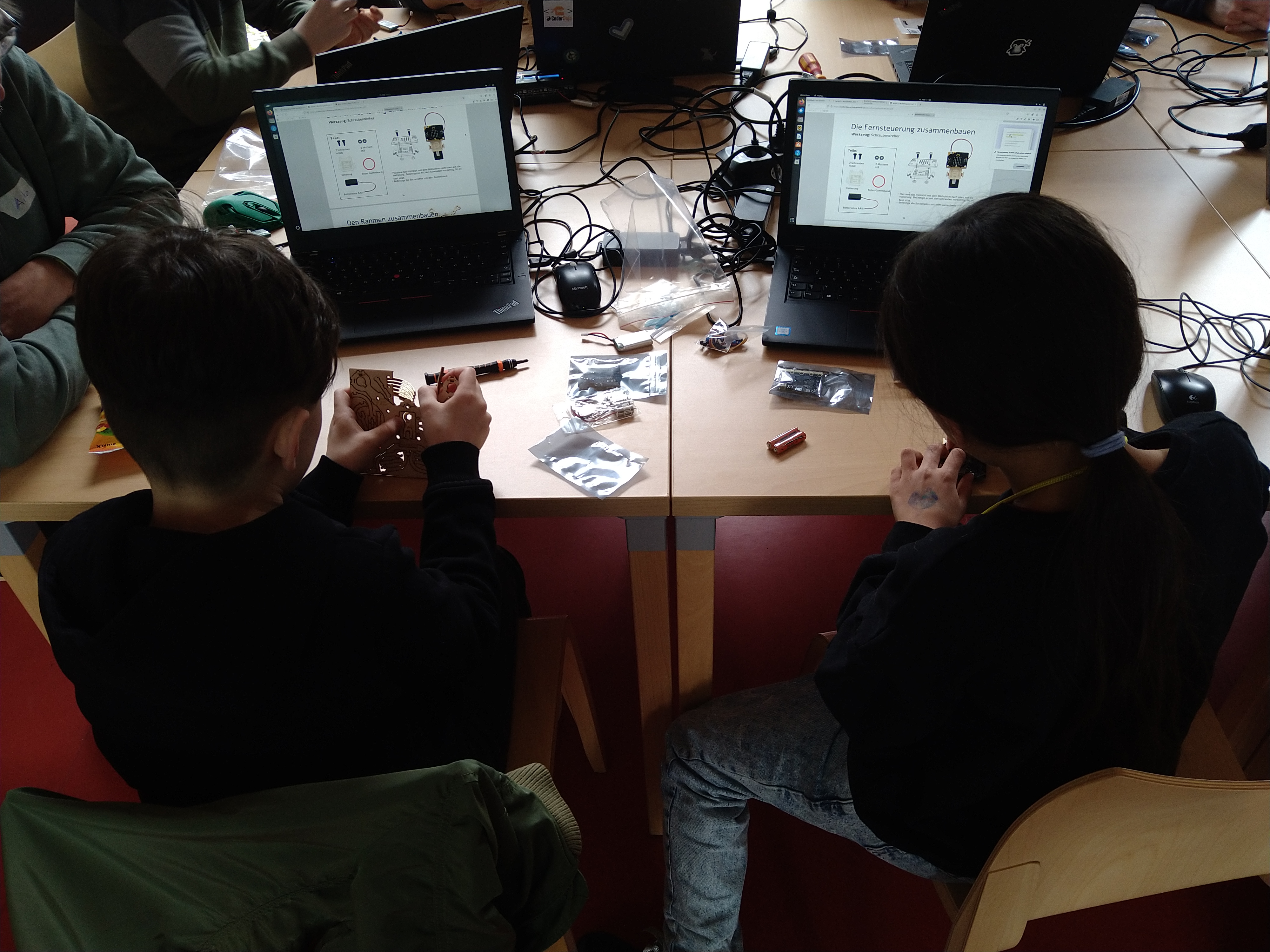
While some children who regularly attend our workshops got started right away, others who had never visited us before were initially shy and uncertain. But after encouragement from the mentors and the more experienced children, they too contributed equally successfully to building the drones. In the next step, the children opened the code for programming the drone and the remote control in the online environment for MakeCode (a block-based programming language for the micro:bit, the microcomputer used as the basis for the drone and the remote control). Each group was assigned a number to which they set the transmission channel of the drone and the remote control, so that the signals would not get mixed up when controlling the drone. After downloading the code as a .hex file and uploading it to the micro:bits, the groups were able to fly their drone. They had to wait for their turn to launch the drone in one of the marked squares while following the rules.
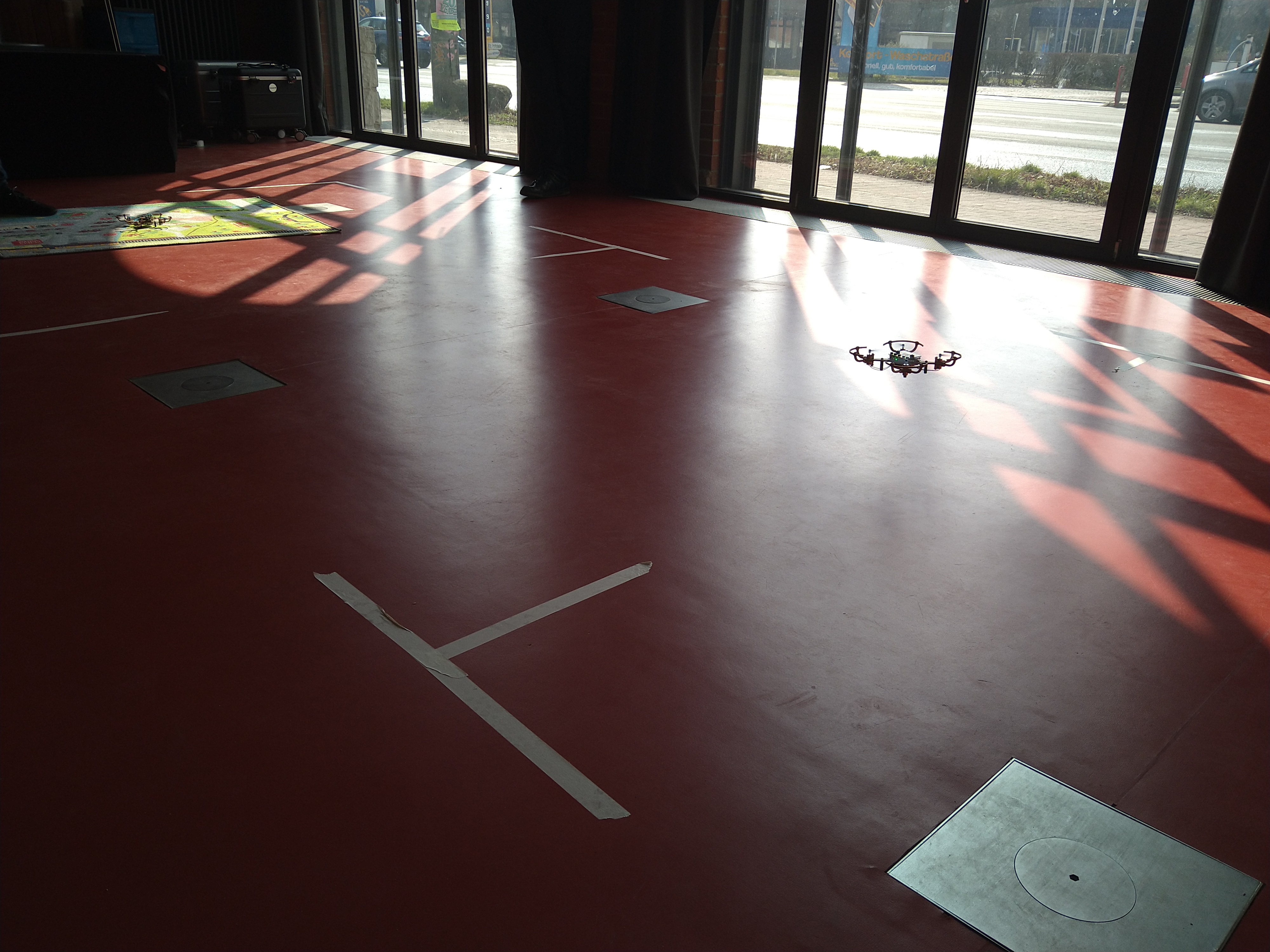
It happened a few times that a child lost control of a drone, which then flew to the ceiling or too far out of the square and an emergency landing had to be performed, which also led to damage to the drones. In particular, the wooden parts broke very easily when the drone flew into an obstacle. But since spare parts were available, the children could directly practice repairing the drones on this occasion.
For the workshop, 10 drone building kits were purchased — a large acquisition by our standards, which was thankfully funded by the VDI-Joachim-Herz-Technikfonds. Unfortunately, we could only conduct the workshop with 14 instead of 20 children, as we realized during preparations that we needed to reserve enough space in the available room for trying out the drones — because the weather forecast was bad, so we could not use the library’s courtyard. With 20 children, it would have been too cramped in our room for safe flying. Through the children working in teams and with parents, and through our high mentor-to-child ratio, even younger children could participate in the workshop without any problems — everyone managed to build and program the drones. Unlike originally planned, we allocated more time to assembling the drones due to the age of our participants (2 hours — which also proved necessary), so the programming part was minimal and is to be explored in more depth in a follow-up workshop.
Thanks to the funding from the VDI-Joachim-Herz-Technikfonds program, a special workshop was made possible for children in Berlin-Schöneweide and the surrounding area. The young participants showed rapid progress in building and controlling the drone and enthusiastically expressed interest in follow-up workshops. The participants and mentors were thrilled by this extraordinary workshop. We sincerely thank VDI e.V. and the Joachim Herz Foundation for their uncomplicated and swift support.